
Buying a Condo After Selling Your HDB: A Step-by-Step Singapore Guide
Selling an HDB flat and moving to a private condominium requires more than comparing property prices. HDB sale proceeds, CPF refunds, outstanding loans, stamp duties, mortgage limits and the timing between both transactions can all affect how much you can realistically afford. This step-by-step guide explains how to plan an HDB-to-condo upgrade in Singapore, calculate the funds available after selling your flat, assess a suitable condo budget and coordinate the transition without overstretching
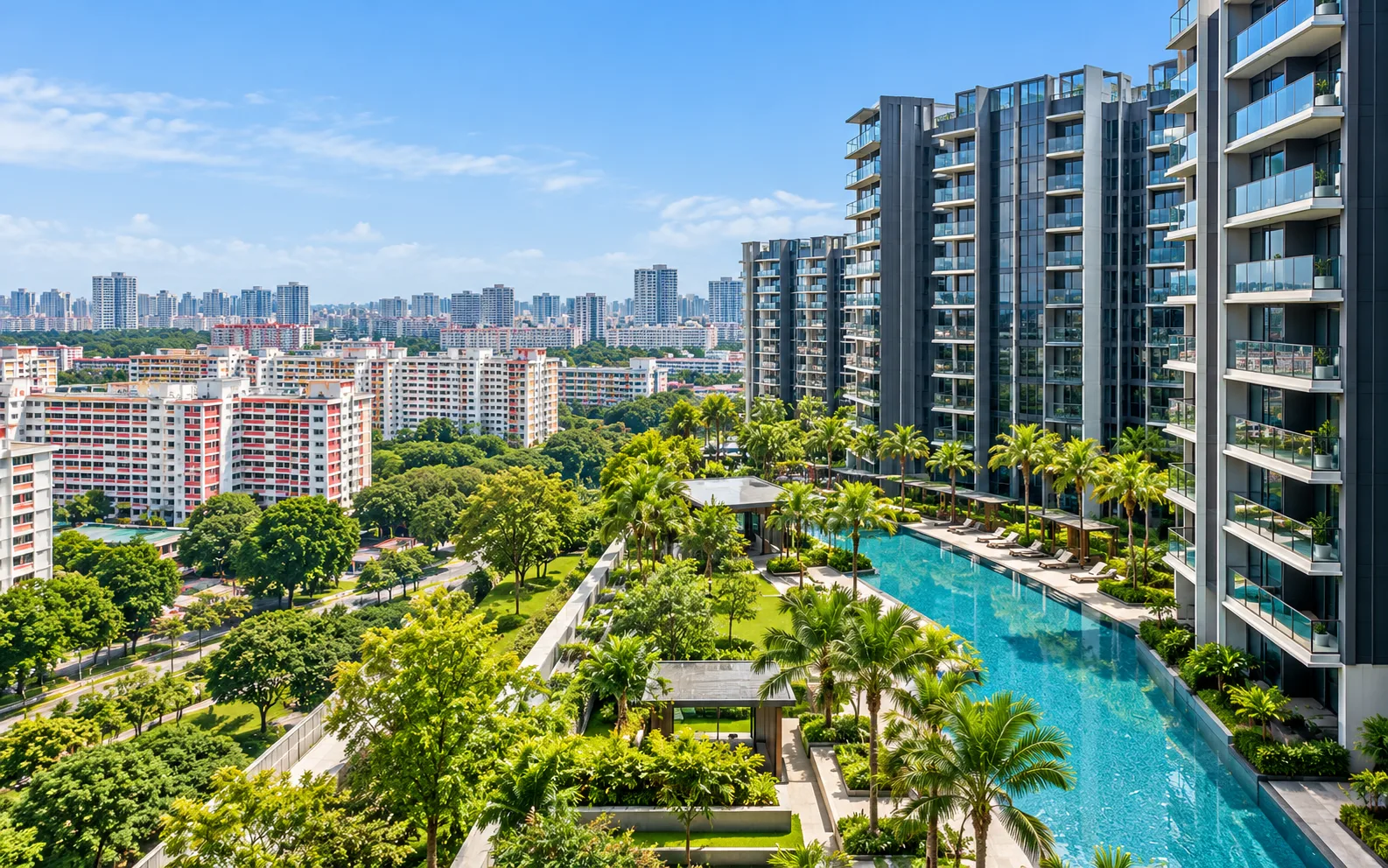
For many Singapore homeowners, reaching the Minimum Occupation Period creates a new set of choices. You may be happy to remain in your HDB flat, or you may be considering a private condominium for more space, different facilities, a preferred school or work location, or a longer-term housing plan.
If the intention is to sell HDB and buy condo in Singapore, the sequence can be financially cleaner than buying the condo while you still own the flat. But it is not automatically simple. Your HDB sale proceeds are not the same as the sale price, CPF monies used for the flat generally have to be refunded to your CPF account with accrued interest, the condo purchase requires its own downpayment and stamp duties, and your bank will still assess whether the new mortgage is affordable.
The central question when buying a condo after selling HDB in Singapore is therefore not only, “Can I buy a condo?” It is, “After the HDB sale, how much cash and CPF will I actually have, how much can I responsibly borrow, and can I coordinate the two transactions without creating a cashflow or housing gap?”
This guide explains the HDB upgrader condo buying process step by step for an owner planning to sell the HDB first and move into a private condominium.
Quick Summary: The Sell-HDB-Then-Buy-Condo Route
A typical sequence looks like this:
Confirm that your HDB flat has fulfilled its applicable Minimum Occupation Period.
Estimate the realistic sale price of the flat rather than relying on an optimistic asking price.
Calculate the outstanding housing loan, required CPF refund and selling expenses.
Work out how much cash and CPF should be available after the HDB sale.
Obtain a bank in-principle assessment for the condo mortgage before committing to a purchase.
Register your HDB Intent to Sell and begin marketing the flat.
Secure the HDB sale and map the resale completion timeline.
Shortlist condos that fit the post-sale budget, not the maximum theoretical loan.
Review the condo price, condition, tenure, maintenance costs and exit demand.
Make an offer only after confirming funding, stamp-duty exposure and transaction timing.
Complete the condo purchase and retain an adequate household reserve after moving.
Selling first can reduce the financial complexity of the upgrade because the household is no longer trying to finance two homes at the same time. However, the trade-off is that you may need temporary accommodation or a carefully coordinated handover period between the HDB completion and the condo completion.
Step 1: Confirm That You Can Sell Your HDB and Buy Private Property
The first step in an HDB to condo upgrade Singapore plan is to confirm that your HDB has completed the applicable Minimum Occupation Period, or MOP.
HDB currently states that owners of unclassified or Standard flats generally have a five-year MOP, while new and resale Plus and Prime flats generally have a 10-year MOP. Other schemes can have different occupation periods. Owners and essential occupiers are restricted from acquiring an interest in private residential property during the applicable MOP.
Do not rely only on the date you collected your keys. HDB's computation can exclude periods when the flat was not occupied as required. Check the actual MOP status in your HDB records before planning the transaction.
For a homeowner who has fulfilled MOP and is considering an HDB-to-condo move, the broader planning issues are covered in the HDB-to-condo asset progression guide.
Why the sale-first sequence matters
After MOP, households with at least one Singapore Citizen flat owner may, subject to HDB's prevailing conditions, acquire private residential property and retain the HDB flat. All-PR HDB-owner households face different disposal requirements when acquiring local private residential property.
However, retaining the HDB can materially change the financial position of the condo purchase because the buyer may be acquiring an additional residential property and may still have an outstanding housing loan.
This article therefore focuses on a different route: disposing of the HDB first, then buying the condo as the next home.
The decision to sell HDB first or buy condo first should be made only after reviewing the household's ownership structure, citizenship, marital status, mortgage position and available cash. The tax consequences can also depend on the dates and documents involved in the two transactions.
Step 2: Calculate What the HDB Sale Will Actually Release
A common planning mistake is to treat the expected HDB sale price as money available for the condo.
It is not.
When an HDB flat is sold, the sale proceeds are generally used to discharge the outstanding housing loan and make the required CPF refund. Other sale expenses also have to be paid. If CPF savings were used for the HDB, the required refund generally includes the principal amount withdrawn and accrued interest.
That means your HDB sale proceeds for condo purchase should start with a net-proceeds calculation.
A simple planning formula is:
Expected HDB selling price
minus outstanding housing loan
minus required CPF refund
minus selling and legal expenses
equals estimated cash proceeds
The CPF refund after selling HDB is not necessarily money lost from the upgrade. For homeowners below age 55, refunded sale proceeds are generally credited to the Ordinary Account and may subsequently be used for an eligible property purchase, subject to CPF's prevailing housing rules and limits. Different considerations can apply from age 55.
Cash proceeds and CPF refunds are therefore two different pools of money and should be tracked separately.
Before putting the flat on the market, check your outstanding loan and your CPF Home Ownership dashboard rather than estimating the CPF refund from memory.
You should also form a realistic view of the HDB selling price. Recent transactions, flat attributes, floor level, remaining lease, location, condition and buyer demand can all affect the eventual price.
The HDB valuation and pricing guide can support this part of the planning.
Worked HDB sale example
Assume a household expects to sell its HDB for S$720,000.
For illustration only:
Item | Illustrative Amount |
|---|---|
Expected HDB selling price | S$720,000 |
Outstanding housing loan | S$160,000 |
Required CPF refund | S$230,000 |
Estimated selling and legal expenses | S$18,000 |
Estimated cash proceeds | S$312,000 |
In this example, the household does not walk away with S$720,000 in cash.
It has approximately S$312,000 in cash proceeds, plus the CPF amount refunded to the owners' CPF accounts and available subject to the applicable CPF rules.
The actual numbers can differ substantially. The point is to calculate them before choosing a condo budget.
Step 3: Build the Condo Budget From Cash, CPF and Loan Capacity
Once you understand the likely HDB sale proceeds, build the condo budget from three components:
Cash available after the HDB sale and after preserving an emergency reserve.
CPF Ordinary Account savings that can be used for the new property under prevailing rules.
A bank loan that is both available and comfortable to service.
For private property, financing comes from a bank or another permitted financial institution rather than an HDB housing loan.
Under current MAS macroprudential settings, the maximum loan-to-value limit for a borrower with no outstanding housing loan is generally 75%, subject to conditions. The current limits are 75% for a first housing loan, 45% where the borrower has one outstanding housing loan, and 35% where there are two or more. Tighter limits can apply when the loan tenure exceeds specified thresholds or extends beyond age 65.
These are regulatory ceilings, not guaranteed loan amounts.
The bank can approve less after considering income, age, debts, credit profile, loan tenure and the property itself.
The Total Debt Servicing Ratio also matters. MAS currently sets the TDSR threshold at 55% of the borrower's monthly income, taking account of total monthly debt obligations.
The property affordability guide and home-loan guide can support this assessment, but the actual loan amount should be confirmed with the intended bank before making a binding condo commitment.
“How much condo can I afford after selling HDB?”
The answer should not be based solely on the bank's maximum loan.
A bank's approval tells you what it may be prepared to lend. It does not determine whether the resulting mortgage is comfortable after maintenance fees, property tax, insurance, childcare, transport, retirement savings and other household commitments.
For an HDB upgrader in the 30-to-40 age range, the condo mortgage may overlap with years of high family expenditure.
A more useful affordability test is:
Can the mortgage still be paid if one income falls temporarily?
Is there enough cash left after completion?
Can the household absorb higher mortgage costs?
Is retirement saving still possible?
Is there room for children's expenses or other planned commitments?
Would the family still consider the property affordable five years later?
That is different from asking for the most expensive condo the bank will finance.
Step 4: Budget for the Condo Downpayment, BSD and Other Upfront Costs
If the bank is prepared to lend up to 75% of the condo value or purchase price, subject to the applicable rules and valuation, the household must fund the remaining 25%.
For a private property purchase, CPF states that OA savings can be used after the required legal documentation and cash payments, including a minimum 5% cash downpayment of the lower of the purchase price or valuation, where applicable.
The condo down payment after selling HDB is therefore not the only sum that has to be prepared.
You also need to budget for:
Buyer's Stamp Duty.
ABSD if applicable.
Legal and conveyancing fees.
Valuation-related costs where relevant.
Renovation.
Furniture and appliances.
Moving costs.
Temporary accommodation if there is a housing gap.
An emergency cash reserve.
Current Buyer's Stamp Duty
Residential BSD is calculated progressively on the higher of the property's purchase price or market value.
The current bands are:
Residential Property Value | BSD Rate |
|---|---|
First S$180,000 | 1% |
Next S$180,000 | 2% |
Next S$640,000 | 3% |
Next S$500,000 | 4% |
Next S$1,500,000 | 5% |
Remaining amount | 6% |
Example: buying a S$1.6 million condo
For a S$1.6 million condo, assuming the household qualifies for a 75% loan and the valuation supports the purchase price:
Item | Illustrative Amount |
|---|---|
Condo purchase price | S$1,600,000 |
Illustrative 75% bank loan | S$1,200,000 |
25% downpayment | S$400,000 |
Minimum 5% cash component | S$80,000 |
BSD | S$49,600 |
The downpayment plus BSD is therefore S$449,600 before legal fees, renovation, furnishing, moving and the household reserve.
The remaining 20% of the downpayment may potentially be funded from eligible CPF OA savings or cash, subject to CPF rules and the property's valuation.
This is why the combination of HDB cash proceeds and refunded CPF matters much more than the headline HDB selling price.
For further planning, use the CPF property guide together with CPF's official housing tools.
Step 5: Understand the ABSD Difference Between Selling First and Buying First
Current ABSD rates make transaction sequence particularly important.
A Singapore Citizen buying a first residential property currently does not pay ABSD. A Singapore Citizen buying a second residential property is currently subject to 20% ABSD.
A Singapore Permanent Resident buying a first residential property is currently subject to 5% ABSD. Different rates apply to subsequent purchases and to foreign buyers.
If you have disposed of your HDB interest before acquiring the condo and the condo is treated as your first residential property at the relevant acquisition date, your ABSD position can therefore be materially different from buying the condo while you still own the HDB.
What about married couples who buy first?
IRAS has a remission framework for qualifying married couples who jointly purchase a second residential property and subsequently dispose of their first property.
Among the conditions, the couple must include at least one Singapore Citizen, the property must be jointly purchased under both spouses' names, and the first residential property generally has to be sold within the prescribed six-month period. Other conditions also apply.
This should not be treated as an automatic ABSD refund for every couple.
The timing requirement is strict.
For households that do not want to fund the additional tax upfront or carry the risk of failing a remission condition, selling first can provide a simpler structure.
The exact legal dates used to determine acquisition and disposal should still be confirmed with the conveyancing lawyer and IRAS where necessary.
Step 6: Start the HDB Sale Before Committing to the Condo
HDB's selling process starts by registering an Intent to Sell through My Flat Dashboard.
A valid Intent to Sell must generally have been registered for at least seven days before the seller can grant the HDB-prescribed Option to Purchase to a buyer.
This is one reason not to wait until a buyer is ready to make an offer before starting the formal process.
A sensible sequence is:
Confirm MOP and eligibility to sell.
Register the Intent to Sell.
Estimate net proceeds and determine an acceptable price range.
Prepare the flat for marketing.
Conduct viewings.
Negotiate with prospective buyers.
Grant the prescribed HDB OTP only after the applicable requirements are met.
Allow the buyer to exercise the OTP.
Submit the resale application and required documents.
HDB states that, where the application and documents are in order, it takes about eight weeks from acceptance of the resale application to process and complete the transaction.
Treat that as a planning reference rather than a guarantee for every sale.
The HDB selling guide can be used alongside the official HDB process.
Step 7: Plan Your HDB-to-Condo Timeline
The main disadvantage of selling first is not necessarily tax or financing.
It is logistics.
Your HDB may complete before the condo is available for occupation. A resale condo purchase may allow the two completion periods to be coordinated reasonably closely, but they will not always align perfectly.
A new-launch condo can involve a much longer wait.
Your HDB to condo timeline Singapore plan should therefore cover both the property transactions and where the family will live between them.
Possible arrangements can include:
Temporary rental.
Staying with family.
Negotiating transaction dates where legally and commercially possible.
Other short-term accommodation appropriate for the household.
Do not assume that you can remain indefinitely in the HDB after the sale has completed.
Possession, completion and any temporary arrangement need to be properly agreed and documented.
The funding gap matters too
There can also be a period between committing to the next property and receiving refunded CPF from the HDB sale.
CPF Board states that a purchaser who buys the next property before receiving the CPF refund from the existing property's sale may consider a bridging loan from a bank, subject to approval and applicable financing limits.
A household can therefore appear sufficiently wealthy on a spreadsheet while still being short of funds on a particular payment date.
Transaction timing is part of affordability.
Step 8: Shortlist Condos Based on Family Fit, Not Just Price
Only after the household budget and sale timeline are clear should the condo search become serious.
For an HDB upgrader buying the next family home, compare more than prestige, facilities or price per square foot.
Review:
Usable internal area.
Bedroom sizes.
Layout efficiency.
Storage.
Work-from-home requirements.
Natural light and ventilation.
Orientation and facing.
Travel time to work.
MRT and bus access.
Schooling considerations where relevant.
Access to parents or other family members.
Maintenance fees.
Development size.
Age and condition of a resale condo.
Remaining tenure.
Renovation requirements.
Upcoming competing supply.
Likely future buyer demand.
An HDB-to-condo upgrade should improve the household's position in a way that justifies the additional capital commitment and recurring costs.
A condo with impressive facilities but an impractical layout may not improve daily life.
Likewise, a property that consumes almost all of the HDB equity can reduce financial flexibility even if the family technically qualifies for the mortgage.
Step 9: Obtain the Bank Assessment Before Making an Offer
Before exercising an OTP for a resale condo or committing to a new launch, obtain a current financing assessment from the intended lender.
The bank will assess:
Household income.
Borrower age.
Existing loans.
Credit profile.
Loan tenure.
Property value.
Applicable TDSR.
Applicable LTV.
Its own internal credit policies.
Even if an online calculator suggests that a S$1.2 million mortgage is possible, the bank's actual approval may be lower.
Confirm:
Maximum loan quantum.
Loan tenure.
Expected monthly repayment.
Interest-rate structure.
Lock-in conditions.
Early repayment conditions.
Refinancing conditions.
Required cash at each payment stage.
CPF required at each payment stage.
How any incomplete HDB sale affects the bank's loan assessment.
Do not rely on an old in-principle approval if your income, liabilities, property choice or transaction sequence has changed.
Step 10: Complete the Condo Purchase With the Tax Timeline in View
Once you have chosen the condo and agreed on a price, the conveyancing process becomes critical.
For a resale private property, review the OTP carefully before exercising it. Confirm the agreed price, deadlines, financing, completion terms, possession arrangements and other contractual conditions with the appropriate professionals.
BSD and any applicable ABSD are upfront transaction costs.
IRAS states that documents executed in Singapore generally need to be stamped within 14 days after signing to avoid penalty. Where the document is signed overseas, the general period is 30 days after the document is received in Singapore.
If CPF will be used for the condo, coordinate the CPF application with the lawyer and lender.
Do not assume that refunded CPF from the HDB sale will automatically be transferred into the condo purchase.
Before completion, confirm:
Final purchase funds.
Bank-loan disbursement.
CPF usage.
BSD and any applicable ABSD.
Legal fees.
Completion date.
Handover arrangements.
Renovation and moving schedule.
Worked Upgrade Scenario: From a S$720,000 HDB to a S$1.6 Million Condo
Consider a simplified household example.
HDB sale
Item | Amount |
|---|---|
HDB selling price | S$720,000 |
Outstanding housing loan | S$160,000 |
Required CPF refund | S$230,000 |
Selling and legal expenses | S$18,000 |
Estimated cash proceeds | S$312,000 |
Condo purchase
Item | Amount |
|---|---|
Condo price | S$1,600,000 |
Illustrative 75% loan | S$1,200,000 |
Downpayment | S$400,000 |
Minimum 5% cash component | S$80,000 |
BSD | S$49,600 |
Assume the household's refunded CPF plus existing OA savings provide at least S$320,000 eligible for the property purchase.
The S$400,000 downpayment could potentially be met using S$80,000 in cash plus S$320,000 in CPF, subject to CPF rules and the property's valuation.
But that does not mean the household should immediately use the remaining HDB cash proceeds for renovation or increase the condo budget.
From the S$312,000 estimated cash proceeds, S$80,000 may already be required for the minimum cash downpayment. BSD of S$49,600 must also be budgeted, together with legal fees, renovation, moving and possibly temporary accommodation.
The household then needs to decide how much cash should remain untouched.
A family left with very little cash after completion may be technically capable of buying the condo but financially exposed to:
Job loss.
Lower bonus income.
Medical expenses.
Major repairs.
Higher mortgage costs.
Increased childcare or education expenses.
Other family emergencies.
This is the difference between purchase affordability and ownership resilience.
A Practical HDB-to-Condo Decision Framework
Before upgrading, answer these five questions in order.
1. Has the HDB sale price been tested against the market?
Do not build the upgrade around an asking price that buyers may not pay.
Use recent comparable transactions and current market feedback to establish a realistic selling range.
A difference of S$50,000 in the HDB sale price can materially change the condo budget.
2. Do you know the exact CPF refund and loan balance?
Do not estimate either figure.
The CPF principal plus accrued interest can materially change the amount of cash released from the HDB.
Check the current figures through the relevant official channels before committing to the next property.
3. Is the condo affordable without using every available dollar?
Budget for:
Downpayment.
BSD.
Legal costs.
Renovation.
Furniture.
Moving.
Temporary housing if needed.
An emergency reserve.
The upgrade should not depend on perfect employment, perfect interest rates and zero unexpected expenditure.
4. Can the family manage the transition period?
Map the:
HDB Intent to Sell.
HDB OTP.
Resale application.
Expected HDB completion.
Condo OTP or booking.
Condo completion.
Renovation period.
Moving date.
Include a contingency if one side of the transaction is delayed.
5. Does the condo solve a genuine long-term need?
A larger mortgage does not automatically create a better home.
The property should fit the family's:
Space requirements.
Location needs.
Schooling considerations.
Work arrangements.
Lifestyle.
Financial priorities.
Expected holding period.
If the answer to any of these five questions remains unclear, resolve it before exercising the condo purchase.
Common Mistakes When Buying a Condo After Selling an HDB
1. Treating the HDB selling price as available cash
Outstanding debt, CPF refunds and transaction costs reduce the cash released from the sale.
2. Searching for condos before checking the mortgage
This can cause buyers to become emotionally committed to homes that exceed a sensible budget.
Establish the financial range first.
3. Ignoring the timing of CPF refunds
CPF savings may be usable for the next property, but timing matters.
The money has to be refunded through the HDB sale process before it can be redeployed.
4. Assuming a 75% LTV is guaranteed
The 75% figure is a regulatory maximum under qualifying circumstances, not a guaranteed loan.
The bank can lend less.
5. Spending the entire HDB equity on the condo
Condo ownership adds recurring costs.
Preserve liquidity for maintenance fees, property tax, insurance, repairs and household emergencies.
6. Forgetting the housing gap
A financially sound upgrade can still become disruptive if the family has nowhere practical to live between the two transactions.
7. Comparing condos only by price per square foot
PSF can be useful, but it does not capture layout efficiency, total price, maintenance fees, tenure, condition, location or future buyer demand.
8. Treating ABSD as a simple rule of thumb
ABSD depends on the buyer profile, existing property interests and ownership structure.
Remission rules contain specific conditions.
9. Using maximum borrowing capacity as the affordability target
A household that can pass TDSR may still be uncomfortable with the resulting monthly commitment.
10. Forgetting to test the next five years
The condo should remain affordable after changes in employment, family expenditure and financing conditions.
Final Checklist: Are You Ready to Buy the Condo?
HDB sale
MOP has been fulfilled and verified.
Intent to Sell has been registered.
Expected selling price is supported by market evidence.
Outstanding housing loan is known.
Required CPF refund is known.
Estimated selling costs have been included.
Condo budget
Bank financing has been assessed recently.
Downpayment is available in the required cash/CPF mix.
BSD has been calculated.
ABSD position has been checked for the actual ownership structure.
Legal, renovation and moving costs have been included.
A post-completion emergency reserve remains available.
Timing and suitability
HDB and condo transaction dates have been mapped.
Temporary accommodation has been considered if required.
Condo maintenance and recurring ownership costs fit the monthly budget.
The unit suits the family's practical needs.
The purchase works under a more conservative income or financing scenario.
Conclusion: Sell First, Then Buy With Known Numbers
Buying a condo after selling your HDB can create a clearer upgrade path because the HDB equity, CPF refund and outstanding debt become easier to quantify before the next major commitment.
The strategy still requires careful sequencing.
Confirm MOP, estimate the HDB sale realistically, calculate cash and CPF separately, obtain an appropriate bank assessment, budget for BSD and other upfront costs, and plan the housing gap before exercising the condo purchase.
Most importantly, do not define a successful HDB-to-condo upgrade simply by whether the bank approves the mortgage.
A sustainable upgrade is one that improves the family's housing position while leaving enough financial flexibility for the years after completion.
Want this applied to your own home move?
Every article here generalises. A 20-minute conversation makes it specific to your numbers.
Sources
- Housing & Development Board — Acquiring Private Property www.hdb.gov.sg/managing-my-home/home-ownership/acquiring-private-property
- Housing & Development Board — Eligibility for Selling a Flat www.hdb.gov.sg/managing-my-home/selling-a-flat/eligibility
- Housing & Development Board — Overview of Flat Selling Process www.hdb.gov.sg/managing-my-home/selling-a-flat/process-for-selling-a-flat/overview
- Housing & Development Board — Application Process for Sale of Flat www.hdb.gov.sg/managing-my-home/selling-a-flat/process-for-selling-a-flat/resale-flat-application/application-process
- Central Provident Fund Board — CPF Refund When Selling or Transferring Property www.cpf.gov.sg/member/home-ownership/using-your-cpf-to-buy-a-home/cpf-refund-when-selling-or-transferring-property
- Central Provident Fund Board — What Happens to the Sales Proceeds After Selling Your Home www.cpf.gov.sg/member/infohub/educational-resources/sales-proceeds-after-selling-your-home
- Central Provident Fund Board — Using CPF for Property Downpayment www.cpf.gov.sg/service/article/can-i-use-my-cpf-savings-for-the-down-payment-of-my-property
- Monetary Authority of Singapore — Current Macroprudential Policies www.mas.gov.sg/publications/macroprudential-policies-in-singapore
- Monetary Authority of Singapore — TDSR Thresholds for Property Loans www.mas.gov.sg/regulation/explainers/tdsr-for-property-loans/calculating-tdsr-thresholds
- Inland Revenue Authority of Singapore — Buyer's Stamp Duty (BSD) www.iras.gov.sg/taxes/stamp-duty/for-property/buying-or-acquiring-property/buyer%27s-stamp-duty-%28bsd%29
- Inland Revenue Authority of Singapore — Additional Buyer's Stamp Duty (ABSD) www.iras.gov.sg/taxes/stamp-duty/for-property/buying-or-acquiring-property/additional-buyer%27s-stamp-duty-%28absd%29
- Inland Revenue Authority of Singapore — Remission of ABSD for a Married Couple www.iras.gov.sg/taxes/stamp-duty/for-property/appeals-refunds-reliefs-and-remissions/common-stamp-duty-remissions-and-reliefs-for-property/remission-of-absd-for-a-married-couple
- Inland Revenue Authority of Singapore — When to Pay Stamp Duty www.iras.gov.sg/taxes/stamp-duty/for-property/paying-stamp-duty/when-to-pay-stamp-duty
Can I buy a condo immediately after selling my HDB?
Do I need to complete my HDB MOP before buying a condo?
What happens to my CPF when I sell my HDB?
Can I use the refunded CPF to buy my condo?
How much cash do I need to buy a condo after selling my HDB?
Will I pay ABSD if I sell my HDB before buying the condo?
Is it better to sell the HDB first or buy the condo first?
How much can I borrow for a private condo?
How long does an HDB resale transaction take?
Should I use all my HDB sale proceeds to upgrade to a condo?

Written by
James Kong (CEA R071529F)
Marketing Director at ERA Realty Network and Certified Aspiration Strategist, helping Singapore families plan their HDB and condo moves.